
The IRS provides three compliance options for taxpayers with undisclosed foreign financial assets:
(i) IRS Criminal Investigation Voluntary Disclosure Practice;
(ii) Streamlined Filing Compliance Procedures;
(iii) Delinquent International Information Return Submission Procedures (IRS, Options available for U.S. taxpayers with undisclosed foreign financial assets).
The IRS first asks a threshold question: was the failure to disclose willful?
The answer determines which compliance option is available to a client an overseas company, foundation, bank account, or cryptocurrency exchange account (or other crypto holding structure).
Who must report what
A U.S. person, including a trust or other entity, must file an FBAR (FinCEN Form 114).
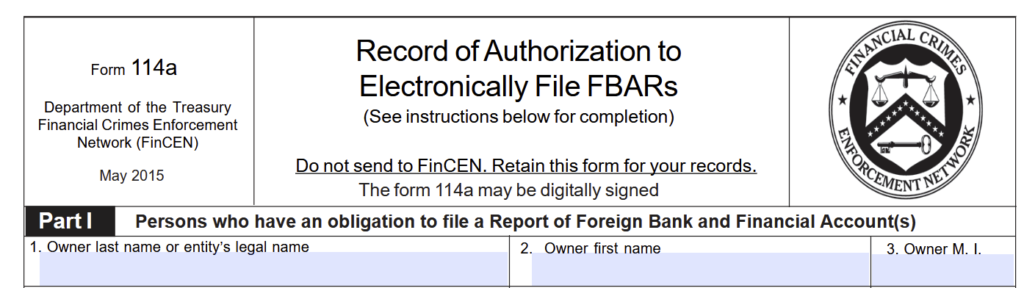
The filing requirement applies when the aggregate value of the person’s foreign financial accounts exceeds $10,000 at any time during the calendar year (IRS, Report of Foreign Bank and Financial Accounts).
Foreign holdings also trigger income-tax information returns:
(i) Form 8938 for specified foreign financial assets;
(ii) Form 5471 for foreign corporations; and
(iii) Forms 3520 and 3520-A for foreign trusts and large foreign gifts (IRS, International information reporting penalties).
Crypto follow a different rule set. FinCEN’s position is that “Currently, the Report of Foreign Bank and Financial Accounts (FBAR) regulations do not define foreign account holding virtual currency.” (FinCEN Notice 2020-2).
However, “FinCEN intends to propose to amend the regulations implementing the Bank Secrecy Act (BSA) regarding reports of foreign financial accounts (FBAR) to include virtual currency as a type of reportable account under 31 CFR 10110.350.” Id.
Income derived from crypto is subject to federal income tax. Form 1040 requires taxpayers to indicate whether they received, sold, exchanged, or otherwise disposed of a digital asset during the tax year.
Income from digital assets is taxable, Form 1040 asks whether the filer received or disposed of a digital asset, and brokers report dispositions on Form 1099-DA beginning with 2025 transactions (IRS, Digital assets).
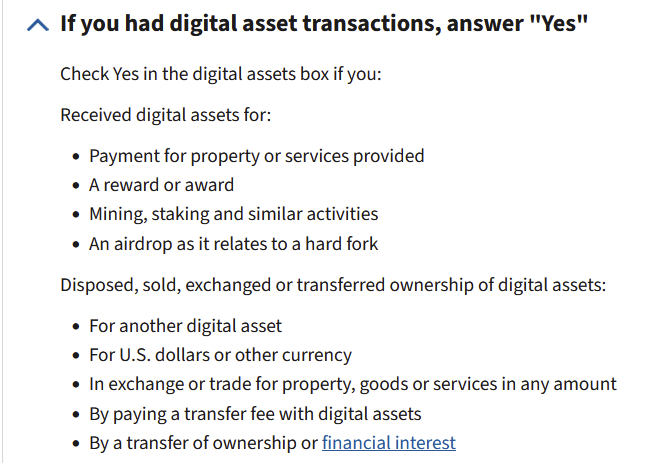
The voluntary disclosure form includes a separate “Digital Asset Issues” section.
It requires taxpayers to disclose “ALL domestic and foreign digital asset transactions related to tax noncompliance.”
The form also requires taxpayers to identify “all aliases, usernames, monikers, mobile phone numbers, and email accounts” used to acquire or dispose of digital assets. (IRS, Form 14457 Instructions (Rev. 7-2025)).

How Dilendorf Law Firm helps
Dilendorf Law Firm assists clients with each of these programs by: (i) evaluating the facts and selecting the most appropriate compliance option; (ii) determining what must be disclosed across foreign accounts, entities, foundations, and digital assets; and (iii) coordinating with outside CPAs to prepare and file the required tax returns.
In voluntary disclosure matters, the firm works with former IRS enforcement officials to help clients develop and refine the Form 14457 narrative, including the required acknowledgment of willful noncompliance.
The programs at a glance
| Voluntary Disclosure Practice (VDP) | Streamlined Domestic Offshore (SDOP) | Streamlined Foreign Offshore (SFOP) | Delinquent International Information Return Submission Procedures | |
|---|---|---|---|---|
| Conduct | Willful; taxpayer must state willful failure to comply | Non-willful, certified on Form 14654 | Non-willful, certified on Form 14653 | No certification; reasonable-cause statement may be attached |
| Who | Individuals and entities | Individuals and estates failing the non-residency test | Individuals and estates meeting the non-residency test | Taxpayers not under examination and not yet contacted by the IRS about the missed forms |
| Years | Six-year Disclosure Period | 3 years of amended returns, 6 years of FBARs | 3 years of returns, 6 years of FBARs | Delinquent forms filed under normal procedures |
| Penalty | 75% civil fraud on one year; willful FBAR penalty where facts and law support | 5% of highest aggregate year-end balance | None | May be assessed under existing procedures |
| Criminal exposure | Considered by IRS-CI; no automatic immunity | Not addressed | Not addressed | Not addressed |
 .
.
Panel A compares the four IRS disclosure options. Panel B is an illustrative hypothetical for a single $1,000,000 foreign account; VDP and examination bars show ceilings under the cited rules, not typical results. Sources are printed on the image and listed below.
How the penalties are computed
Streamlined Foreign Offshore. A qualifying taxpayer “will not be subject to failure-to-file and failure-to-pay penalties, accuracy-related penalties, information return penalties, or FBAR penalties” (IRS, U.S. taxpayers residing outside the United States).
Streamlined Domestic Offshore. “The Title 26 miscellaneous offshore penalty is equal to 5 percent of the highest aggregate balance/value of the taxpayer’s foreign financial assets that are subject to the miscellaneous offshore penalty during the years in the covered tax return period and the covered FBAR period.” (IRS, U.S. taxpayers residing in the United States). [emphasis added]
“A foreign financial asset is subject to the 5-percent miscellaneous offshore penalty in a given year in the covered tax return period if the asset should have been, but was not, reported on a Form 8938 for that year.” (IRS, U.S. taxpayers residing in the United States). For example, a foreign financial asset with a $1 million peak balance would result in a $50,000 penalty.
Voluntary Disclosure Practice. “If any part of any underpayment of tax required to be shown on a return is due to fraud, there shall be added to the tax an amount equal to 75 percent of the portion of the underpayment which is attributable to fraud.” (26 U.S.C. § 6663).
Under the current terms it applies to the one year with the highest tax liability in the six-year Disclosure Period, in lieu of accuracy and late-filing penalties on the other years (IRS, Form 14457 Instructions (Rev. 7-2025)).
Separately, “Willful FBAR penalties will apply to all cases involving FBAR noncompliance where facts and law support” them, computed under the Internal Revenue Manual (IRS, Form 14457 Instructions (Rev. 7-2025)).
For example, if a taxpayer had a $1,000,000 foreign account and underreported $40,000 of tax annually, the potential civil fraud penalty could reach approximately $30,000. In addition, the willful FBAR penalty could be as high as $500,000. The IRS emphasizes that “[n]o penalty deviations will be permitted” (IRS, Voluntary Disclosure Practice, FAQ 18).
Choosing the program: five steps
- Disclosure timing. A voluntary disclosure is timely only if it is submitted before the IRS initiates a civil examination or criminal investigation. It must also be submitted before the IRS receives information from a third party or acquires information through an enforcement action. (IRS, Voluntary Disclosure Practice).
- Was your conduct willful? Willfulness includes knowing violations, reckless violations, and “willful blindness” through “a conscious effort to avoid learning about a legal duty” (IRS, IRM 4.26.16.5.5.1). Non-willful conduct is “negligence, inadvertence, or mistake or conduct that is the result of a good faith misunderstanding” (IRS, Streamlined filing compliance procedures).
- Is the source of income legal? The Voluntary Disclosure Practice “does not apply to taxpayers with illegal sources of income.” Eligibility is determined under federal law. As a result, conduct that is legal under state law but illegal under federal law is treated as illegal for purposes of the program. (IRS, Voluntary Disclosure Practice).
- Inventory every entity. Form 14457 requires identification of related entities, defined to include “corporations, partnerships, associations, limited liability companies, trusts, estates, escrows, charitable foundations, insurance companies, international business companies.” This test applies to both foreign or domestic entities (IRS, Form 14457 Instructions (Rev. 7-2025)).
- Model the tax & penalty consequences under each program before filing anything.
Common misconceptions and mistakes
“A Quiet Disclosure Is Safer.” Not necessarily. Taxpayers who previously filed amended returns or delinquent information returns outside the IRS’s approved disclosure procedures “must pay previous penalty assessments,” and those penalties generally will not be abated (IRS, Streamlined filing compliance procedures).
“Streamlined ends criminal exposure.” The streamlined procedures “do not absolve taxpayers of criminal liability if IRS Criminal Investigation determines their conduct was willful.” (IRS, Voluntary Disclosure Practice, FAQ 17; IRS, Streamlined filing compliance procedures).
“The VDP guarantees immunity.” It “will not automatically guarantee immunity from prosecution,” and CI’s timeliness and completeness determinations “are not subject to any administrative or judicial review or appeal process” (IRS, Voluntary Disclosure Practice; IRS, IRM 9.5.11.9).
“The narrative can hedge.” The IRS states: “You will be required to provide a statement acknowledging your willful failure to comply with tax or tax related obligations” (IRS, Voluntary Disclosure Practice). If the narrative “states they were merely negligent or careless and does not fully describe willful non-compliance, the clearance request will be denied” (IRS, Voluntary Disclosure Practice, FAQ 12).
Procedural slips. Part II is due 45 days after the preclearance letter, with “no more than one 45-day extension,” and a separate Form 2848 is required for each taxpayer and entity (IRS, Voluntary Disclosure Practice).
Frequently asked questions
Which IRS program should I use if I did not know about the foreign-account rules?
The streamlined procedures are designed for that situation, depending on the facts. They require a certification that the failure was “due to non-willful conduct,” defined as “negligence, inadvertence, or mistake or conduct that is the result of a good faith misunderstanding of the requirements of the law” (IRS, Streamlined filing compliance procedures). The certification is signed under penalties of perjury, so the facts, including any Schedule B answers, should be reviewed before choosing this route rather than the Voluntary Disclosure Practice.
How is the Streamlined Domestic Offshore penalty calculated?
It is 5 percent of the highest aggregate year-end balance or value of the foreign financial assets that were unreported or whose income was unreported, measured over the three-year return period and the six-year FBAR period (IRS, U.S. taxpayers residing in the United States). For a single account that peaked at $1,000,000 at a year end, the penalty is $50,000, in addition to the tax and interest on the amended returns.
What penalties apply in the Voluntary Disclosure Practice?
Under the current terms, a civil fraud penalty of 75 percent of the fraud-related underpayment applies to the one year with the highest tax liability within the six-year Disclosure Period, and willful FBAR penalties apply where the facts and law support them (IRS, Form 14457 Instructions (Rev. 7-2025); 26 U.S.C. § 6663). The IRS states that “No penalty deviations will be permitted” (IRS, Voluntary Disclosure Practice, FAQ 18). Revised terms proposed in December 2025 had not been finalized as of August 2026.
Does a voluntary disclosure guarantee I will not be prosecuted?
No. A voluntary disclosure “will not automatically guarantee immunity from prosecution; however, a voluntary disclosure may result in prosecution not being recommended” (IRS, Voluntary Disclosure Practice). The IRS also states that the practice “creates no substantive or procedural rights for taxpayers” and that CI’s decisions are not subject to review or appeal (IRS, IRM 9.5.11.9). Timing is decisive, because a disclosure received after an examination or third-party tip has begun is not timely.
Do I have to report crypto held on a foreign exchange on the FBAR?
Under FinCEN’s current position, “a foreign account holding virtual currency is not reportable on the FBAR,” although FinCEN has said it “intends to propose to amend” the regulations (FinCEN Notice 2020-2). The income remains taxable, the Form 1040 digital-asset question must be answered, and brokers began reporting dispositions on Form 1099-DA for 2025 transactions (IRS, Digital assets). Form 14457 separately requires a schedule of all digital-asset transactions tied to the noncompliance (IRS, Form 14457 Instructions (Rev. 7-2025)).
What happens if my Form 14457 narrative says the failure was careless rather than willful?
The IRS says the preclearance request “will be denied” if the narrative “states they were merely negligent or careless and does not fully describe willful non-compliance” (IRS, Voluntary Disclosure Practice, FAQ 12). The narrative must tell “the complete story of the willful noncompliance,” identify all advisors, and include favorable and unfavorable facts from inception to the present (IRS, IRM 9.5.11.9.1). This is why the drafting of that statement deserves careful, experienced attention.
I own a foreign company and a foundation, not just a bank account. Does that change the analysis?
Yes. Form 14457 requires identification of every related entity, including corporations, trusts, “charitable foundations” and “international business companies,” and a shareholder “is deemed to have an interest in the foreign account through ownership in the foreign entity” (IRS, Form 14457 Instructions (Rev. 7-2025)). Missed Forms 5471, 3520 and 3520-A carry their own penalties, and the Form 3520 penalty can reach 35 percent of unreported contributions or distributions (IRS, International information reporting penalties).
How does Dilendorf Law Firm help with the willfulness statement?
Dilendorf Law Firm works with retired IRS enforcement officials who help clients write and polish the Form 14457 narrative, including the required statement acknowledging willful failure to comply with tax or tax-related obligations. The goal is a truthful, complete account that meets the IRS requirement for “specific facts that detail the complete story of the willful noncompliance” (IRS, IRM 9.5.11.9.1), while the firm handles program selection, the reporting inventory and the filings.
This article is for general informational purposes only and does not constitute legal advice. Reading it does not create an attorney-client relationship with Dilendorf Law Firm. Attorney Advertising.
Sources
[1] IRS, Options available for U.S. taxpayers with undisclosed foreign financial assets. https://www.irs.gov/individuals/international-taxpayers/options-available-for-us-taxpayers-with-undisclosed-foreign-financial-assets
[2] IRS, IRS Criminal Investigation Voluntary Disclosure Practice (including FAQs 12, 15, 17, 18). https://www.irs.gov/compliance/criminal-investigation/irs-criminal-investigation-voluntary-disclosure-practice
[3] IRS, Form 14457, Voluntary Disclosure Practice Preclearance Request and Application, Instructions (Rev. 7-2025). https://www.irs.gov/pub/irs-pdf/f14457.pdf
[4] IRS, IRM 9.5.11, Investigative Techniques, section 9.5.11.9 Voluntary Disclosure Practice. https://www.irs.gov/irm/part9/irm_09-005-011
[5] IRS, IRM 4.26.16, Report of Foreign Bank and Financial Accounts (FBAR). https://www.irs.gov/irm/part4/irm_04-026-016
[6] IRS, Streamlined filing compliance procedures. https://www.irs.gov/individuals/international-taxpayers/streamlined-filing-compliance-procedures
[7] IRS, U.S. taxpayers residing in the United States (Streamlined Domestic Offshore Procedures). https://www.irs.gov/individuals/international-taxpayers/us-taxpayers-residing-in-the-united-states
[8] IRS, U.S. taxpayers residing outside the United States (Streamlined Foreign Offshore Procedures). https://www.irs.gov/individuals/international-taxpayers/us-taxpayers-residing-outside-the-united-states
[9] IRS, Delinquent international information return submission procedures. https://www.irs.gov/individuals/international-taxpayers/delinquent-international-information-return-submission-procedures
[10] IRS, Report of Foreign Bank and Financial Accounts (FBAR). https://www.irs.gov/businesses/small-businesses-self-employed/report-of-foreign-bank-and-financial-accounts-fbar
[11] IRS, International information reporting penalties. https://www.irs.gov/payments/international-information-reporting-penalties
[12] IRS, Digital assets. https://www.irs.gov/filing/digital-assets
[13] IRS, IRS seeks public comment on Voluntary Disclosure Practice proposal (Dec. 22, 2025). https://www.irs.gov/newsroom/irs-seeks-public-comment-on-voluntary-disclosure-practice-proposal
[14] Taxpayer Advocate Service, Fiscal Year 2027 Objectives Report to Congress, Objective 9. https://www.taxpayeradvocate.irs.gov/news/directory-entry/objective-9-2026/
[15] FinCEN, Notice 2020-2, Report of Foreign Bank and Financial Accounts (FBAR) Filing Requirement for Virtual Currency (Dec. 30, 2020). https://www.fincen.gov/system/files/shared/Notice-Virtual%20Currency%20Reporting%20on%20the%20FBAR%20123020.pdf
[16] 31 U.S.C. § 5321 (U.S. Code 2023 ed., govinfo.gov). https://www.govinfo.gov/content/pkg/USCODE-2023-title31/html/USCODE-2023-title31-subtitleIV-chap53-subchapII-sec5321.htm
[17] 31 C.F.R. § 1010.821, Penalty adjustment and table (Legal Information Institute, Cornell Law School). https://www.law.cornell.edu/cfr/text/31/1010.821
[18] Bittner v. United States, 598 U.S. ___ (Feb. 28, 2023). https://www.supremecourt.gov/opinions/22pdf/21-1195_h3ci.pdf
[19] 26 U.S.C. § 6663 (Legal Information Institute). https://www.law.cornell.edu/uscode/text/26/6663
[20] 26 U.S.C. § 6662 (Legal Information Institute). https://www.law.cornell.edu/uscode/text/26/6662
[21] 26 U.S.C. § 6501 (Legal Information Institute). https://www.law.cornell.edu/uscode/text/26/6501