
Real Estate Tokenization (RWA) Explained: Legal Framework & Key Considerations
Real-world asset (RWA) tokenization—particularly in real estate—is one of the fastest-growing areas in the digital asset industry.
However, many sponsors, developers, and investors underestimate the legal, regulatory, and operational complexities involved in launching a compliant tokenization project.
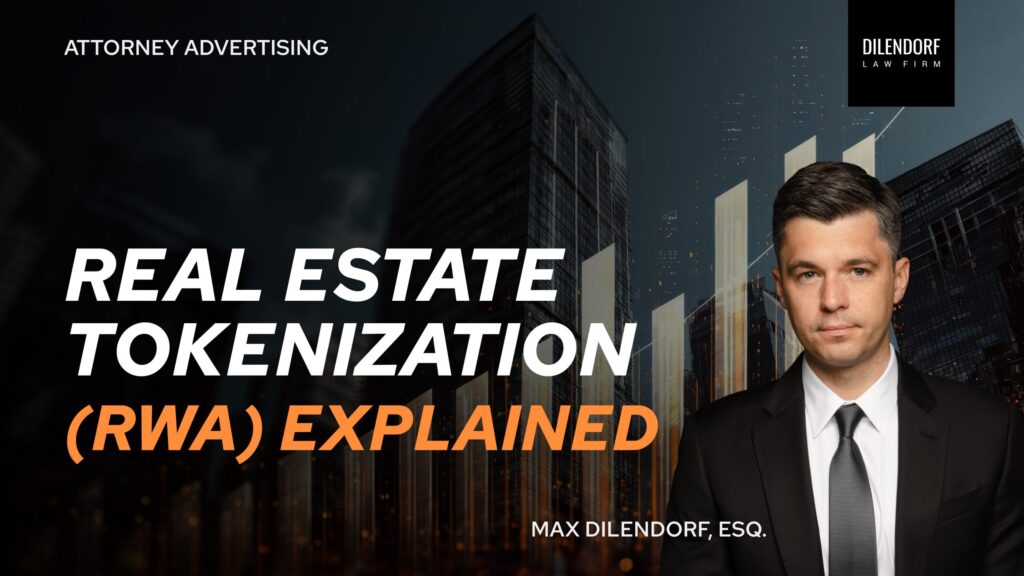
Below is a video presentation by Max Dilendorf, a New York–based attorney who has been advising clients in the crypto and digital asset space since 2017, and one of the first lawyers in the United States to focus his practice on digital assets and cryptocurrencies.
▶️ Watch the Video
What This Video Covers
In this presentation, Max Dilendorf explains the core legal principles behind tokenizing real estate and other real-world assets, including:
- Why tokenization is not simply “putting an asset on the blockchain,” but rather issuing a security subject to U.S. laws
- Key regulatory frameworks, including Regulation D and Regulation A+ under the Securities Act of 1933
- Investment Company Act exemptions such as 3(c)(1) and 3(c)(7)
- Transfer restrictions, resale limitations, and secondary market trading requirements
- The role of broker-dealers, transfer agents, and Alternative Trading Systems (ATS)
The video also includes a real-world example of institutional tokenization, including the 2024 launch of a tokenized fund by BlackRock using Securitize’s regulated infrastructure.
Beyond Real Estate: Tokenization Across Asset Classes
While the focus is on real estate, the same legal principles apply to a wide range of tokenized assets, including:
- Private equity and venture investments
- Music rights and royalty streams
- Film and entertainment financing
- Art and other alternative assets
Key Legal & Operational Challenges
This video highlights several critical issues that must be addressed when launching an RWA tokenization project:
- Choosing the correct securities exemption and investor eligibility requirements
- Structuring entities (LLC vs. C-corp) for tax and compliance efficiency
- Addressing lender consent for mortgaged real estate
- Designing token economics, investor rights, and redemption mechanics
- Evaluating liquidity expectations and secondary trading limitations
- Navigating cross-border offerings and international compliance
Cybersecurity & Custody Risks
A significant portion of the discussion focuses on cybersecurity and custody risks.
Our firm has handled over 100 matters involving cyberattacks, stolen digital assets, and custody failures—including incidents involving accounts held at major platforms such as Coinbase and Gemini.
If you are launching a tokenization project, it is critical to evaluate:
- Platform security and custody infrastructure
- SOC 2 certification and audit history
- Alignment with frameworks such as National Institute of Standards and Technology
- Regulatory oversight of service providers
RWA Tokenization Legal Services
At Dilendorf Law Firm, we advise clients through the full lifecycle of digital asset and tokenization projects, including:
- Tokenization of real estate, equity, music, and entertainment assets
- Structuring securities offerings under U.S. law (Reg D, Reg A+, and others)
- Broker-dealer licensing for digital securities
- Alternative Trading System (ATS) structuring and regulatory strategy
- Money transmitter licensing for blockchain and digital asset platforms
- Compliance with SEC, FINRA, FinCEN, and state-level regulations
Contact Us for a Consultation
If you are considering an RWA tokenization project or need guidance on structuring, licensing, or compliance, we invite you to contact us:
📧 Email: max@dilendorf.com
📞 Phone: +1 212 457 9797
📍 Address: 115 Broadway, 5th Floor, New York, NY 10006
Attorney Advertising. Prior results do not guarantee a similar outcome.