Manhattan Real Estate: Legal Guide for Global Buyers

Investing in Manhattan Real Estate: Key Legal Strategies for International Buyers
If you are an international investor considering purchasing real estate in New York, understanding both market timing and legal structuring is critical.
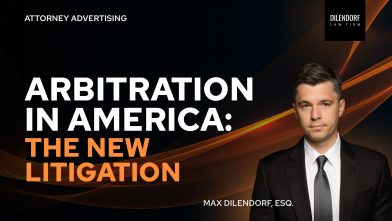
In this video, Max Dilendorf — a New York-based attorney with more than 15 years of experience — shares key insights into acquiring Manhattan real estate, with a focus on investors from Saudi Arabia and other non-U.S. jurisdictions.
Manhattan Real Estate Market Opportunity
As discussed in the video, the Manhattan luxury real estate market is currently experiencing a significant correction.
Prime properties in prestigious neighborhoods such as Central Park South, Hudson Yards, and Tribeca are trading at price levels not seen in over a decade.
For well-capitalized buyers, this presents a rare opportunity to acquire high-value assets at discounted prices in one of the most resilient real estate markets globally.
Structuring Investments to Minimize Tax Exposure
One of the most important considerations for international buyers is U.S. tax exposure.
Investors from countries without a U.S. tax treaty, including Saudi Arabia, may face substantial estate and gift tax liabilities if real estate is not properly structured.
Without planning, tax exposure can reach up to 40%, with only a limited exemption available to non-U.S. individuals.
Max Dilendorf advises clients on advanced legal structures designed to mitigate these risks. These may include offshore trusts, foreign entities, and multi-layered ownership strategies that enhance tax efficiency, preserve privacy, and support long-term wealth planning.
Many international clients acquire New York real estate through trusts formed in jurisdictions such as Delaware, Wyoming, South Dakota, or Nevada.
These trusts often hold Wyoming or Nevada LLCs, which in turn own the real estate asset. This structure is widely used for asset protection and portfolio expansion across multiple U.S. markets.
FIRPTA and Cross-Border Compliance
The video also highlights the importance of complying with the Foreign Investment in Real Property Tax Act (FIRPTA).
Proper planning can help reduce withholding obligations and streamline transactions for non-U.S. investors buying or selling real estate in the United States.
Advanced Strategies: Portfolio Interest Exemption
For certain international investors, structuring real estate investments using the portfolio interest (portfolio debt) exemption can significantly reduce U.S. tax liability.
This is a sophisticated strategy that requires careful legal planning and implementation.
Crypto, Tokenization, and the Future of Real Estate
In addition to traditional real estate structuring, Max Dilendorf is one of the early adopters of cryptocurrency and digital asset law in the United States, having begun practicing in this field as early as 2017.
This experience allows him to advise clients at the intersection of real estate and blockchain technology.
Developers, family offices, and high-net-worth individuals increasingly turn to Max for guidance on:
- Completing real estate transactions using cryptocurrency
- Structuring compliant digital asset payments
- Tokenizing U.S. and international real estate assets
- Navigating regulatory frameworks for blockchain-based ownership
White-Glove Legal Services for Global Investors
Max Dilendorf provides comprehensive, white-glove legal services to real estate buyers, sellers, developers, family offices, and high-net-worth individuals.
His firm assists clients with every stage of the transaction — from identifying distressed real estate opportunities and foreclosures to negotiating contracts and closing deals.
Importantly, the entire process can be handled remotely. International clients can securely invest in New York real estate without traveling to the United States.
Contact Information
Max Dilendorf, Attorney at Law
115 Broadway, 5th Floor
New York, NY 10006
Email: max@dilendorf.com
Attorney Advertising Disclaimer: Prior results do not guarantee a similar outcome. This content is provided for informational purposes only and does not constitute legal advice. Viewing this video or contacting our office does not create an attorney-client relationship. Please consult with a qualified attorney regarding your specific situation.